Why what you eat — and how regularly you eat it — shapes your mental wellness, through the lens of Traditional Chinese Medicine and current research.
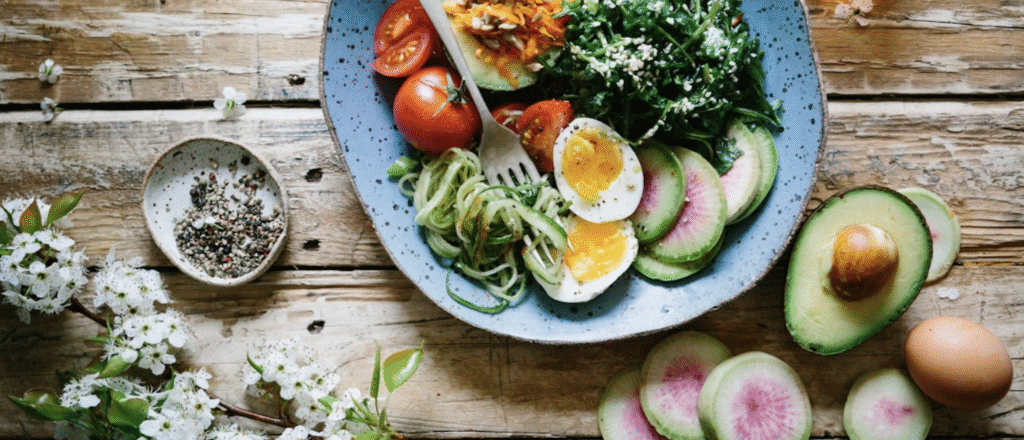
September is both National Nutrition Month and National Suicide Prevention Awareness Month — a pairing that, at first glance, might seem unrelated. But in Traditional Chinese Medicine (TCM), the connection between how we eat and how we feel has never been separate. It’s foundational.
The Spleen-Heart Relationship
In TCM physiology, the Spleen is responsible for transforming the food we eat into Qi (vital energy) and Blood. That Blood does more than circulate oxygen — it is understood to be the physical substance that houses and nourishes the Shen, or Mind/Spirit, which resides in the Heart.
Put simply: a well-functioning Spleen builds strong Blood, and strong Blood gives the Shen a stable home. When digestion is chronically weak — from stress, irregular meals, or a poor diet — Blood becomes thin, and the mind loses some of its rootedness. This can show up as anxiety, poor concentration, low mood, or a wired-but-exhausted feeling that never quite resolves.
🌱 In TCM terms: no Spleen strength, no steady Shen. Digestive health and mental steadiness are treated as two expressions of the same underlying system — not separate problems requiring separate solutions.
What Modern Research Adds
Contemporary nutritional psychiatry research has increasingly validated this ancient framework. The gut is now understood to produce a significant majority of the body’s serotonin, and the vagus nerve provides a direct, bidirectional communication pathway between the digestive system and the brain — often called the gut-brain axis. Blood sugar volatility, too, has been linked in multiple studies to increased anxiety and irritability, echoing the TCM concept of Spleen Qi deficiency destabilizing the mind.
Practical Ways to Support the Spleen-Heart Connection
- Eat at regular times. Irregular meal timing is one of the most common Spleen-depleting habits in TCM theory, and one of the easiest to correct.
- Favor warm, cooked foods over excessive raw or cold food, particularly during stressful periods when digestion is already taxed.
- Include Blood-building foods such as dark leafy greens, dates, and grass-fed proteins, which TCM associates with nourishing both Blood and the Shen.
- Pair carbohydrates with protein and fat to support more stable blood sugar and, by extension, steadier mood throughout the day.
- Notice patterns — if stress consistently drives cravings for sugar or heavy comfort food, that’s often a sign of Liver Qi stagnation rather than a lack of discipline.
A Note on Suicide Prevention Awareness Month
Nutrition and acupuncture are supportive tools, not substitutes for mental health care. If you or someone you love is struggling, please know that support is available and reaching out is a sign of strength, not weakness.
💛 If you or someone you know is in crisis, the 988 Suicide & Crisis Lifeline is available 24/7 by call or text at 988 in the U.S.
Food will never be the whole answer to mental wellness — but it is one of the most accessible, consistent places to start rebuilding a foundation. At Luna Acupuncture, we treat nutrition, digestion, and mental steadiness as one connected system, because in the body, they always have been.
Curious how TCM nutrition support could fit into your care plan? Book a free consultation or call 480.426.9251.


comments +